

'Welcome back, Fair Go': the YouTube video its audience has decided is journalism
The story bleeding into and out of everyone's feeds in New Zealand this week

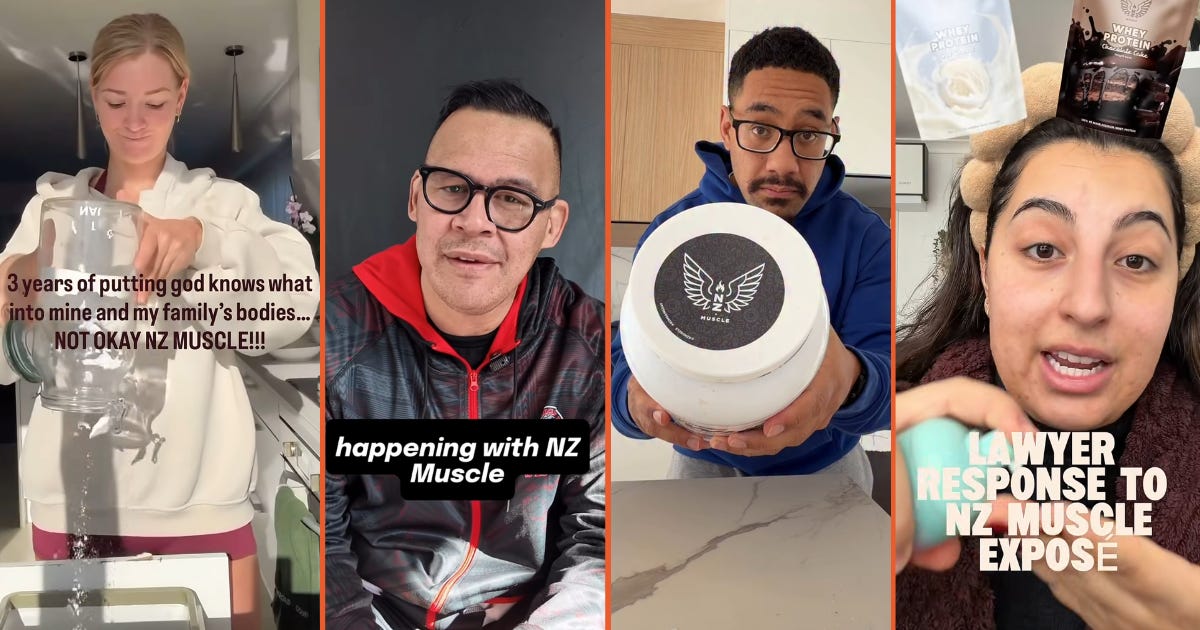
This week, a story bled into my Instagram feed about a New Zealand supplement company, NZ Muscle, facing allegations over its packaging, labelling and regulatory compliance.
The allegations come from a 40-minute YouTube video that currently has over 220,000 views. Its creators, and the people watching and amplifying it, are calling it an investigation and a documentary.
It’s pretty remarkable that it got through to me. While media reference social media like it’s a big centralised town square on another planet — “on social media” being a favourite phrase — it’s actually more like a giant mall full of kiosks you only know about if you’re interested in what they sell. I’m a cantankerous, cynical woman in my mid-forties with a contrarian streak. I have developed ninja-like reflexes trained to knock anything that contains the words protein, creatine, or peptides out of my algorithm. My algorithm is fine-tuned to deliver exactly 874,321 minutes of microdrama about amoral AI-generated anthropomorphic fruit and self-perpetuating reassurance in the form of incredibly accurate astrological forecasts and tarot card readings.
Institutional media took a few days to arrive at it this story. rova ran a story on June 22. Stuff and the NZ Herald followed on June 23. As reported by both, NZ Muscle has since released a statement saying that, after an internal review, it has removed some products from sale and apologised to customers. According to the Herald, a New Zealand Food Safety spokesperson says the agency was aware of the claims and is “examining the evidence”, while the Commerce Commission is assessing whether it would undertake an investigation into the company.
You may not have seen any of it. The communities around fitness and supplements are vast, but unless you’re into what they’re selling, they are algorithmically sealed off, which is how a story can be the biggest thing happening to a great many people while everyone else hears nothing.
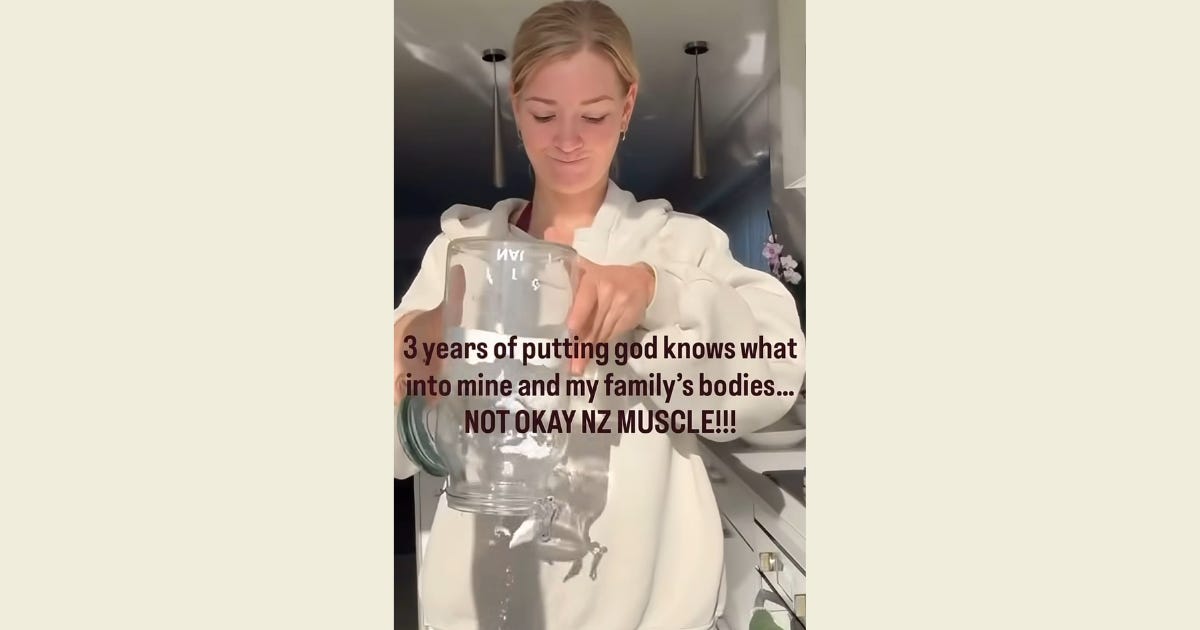
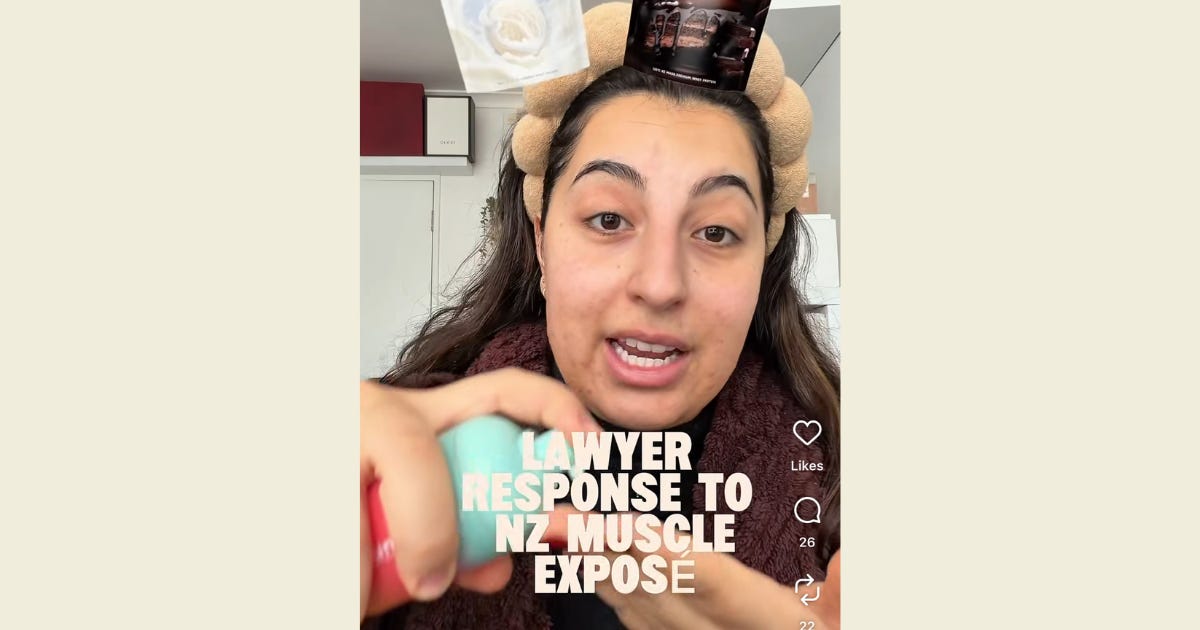
This story has jumped out of its lane, propelled by all the usual trimmings of a social media firestorm and accelerated by the supplement industry’s close ties to social media content creators, many of whom are dealing with their own crisis of trust as former ambassadors who recommended the products of the company in question. The documentary is being discussed and clipped. Others are filming reactions to the allegations. Lawyers are filming videos breaking down the legals of it. One video of a woman tipping the powder into the bin has over 1.1 million views.
A business getting torched on social media is not new. The pipeline that carries an online pile-on into the mainstream press has been running for the better part of two decades.
The creator investigation is not necessarily new either. Independent writers and journos like David Farrier have been doing it here. Internationally, it is close to a genre by now: the lone YouTuber or small outfit that spends months on a target, publishes a long and lawyered video, offers a right of reply, and calls the result a documentary, which it is.
What is new, or perhaps has gone unchecked for a while, is the adoption and embrace of old-media visage in a new-media world, to the point where the audience just says, “yep, this is investigative journalism now”. It’s as if a vacuum appeared, was noticed and then got filled while the media was wringing its hands over how to ensure people know that journalism is important (democracy will die, etc.) and DIfFereNt from what content creators do. The problem is the audience doesn’t care and is happily awarding the NZ Muscle documentary laurels that were previously reserved for the work of our longform current affairs journalists.
The video carries all the furniture of a documentary or investigation. It opens with dramatic strings and a pacey montage of clips and voiceovers. Subsequent videos from one of the creators discuss the right of reply, months of work, legal letters, and PR firms. The channel has “Investigates” in its name. That furniture carries a whole lot of implied meaning that used to belong only to institutional journalism - trust, editorial oversight, time spent, vetting, fact checking, regulatory standards and bodies and consequential weight.
One of the people involved in making the documentary runs a business that competes directly with the company under the microscope. That’s a conflict of interest that would be caught within a news media environment, and it’s not to say it takes away from what is being alleged, or from the work that was done. It just highlights that in the eyes of audiences, if it looks like a duck, swims like a duck, and quacks like a duck, then it probably is a duck. People like ducks, even if there’s a conflict of interest bobbing around in the duck soup.
The apparatus, meant to differentiate journalism from content, is technically missing, yet the audience does not appear to miss it.
The top comment on YouTube simply says, “Close enough. Welcome back Fair Go.” People are reaching for the language of television current affairs and all it means to them to describe something made by a creator operating outside the strictures of the industry that spawned the language. It’s the nearest shorthand they have for what this video is doing.
Stuff and the Herald named no channel in their reporting and linked to nothing, sourcing the whole story to “a YouTube video”. There are sound reasons to be careful, but it will no doubt bounce around online as them not crediting the source or “stealing the story”. The caution is real, but explaining it is to fight a losing battle, and to the people already inside the story, who watched the thing days ago and know exactly where it came from, “a YouTube video” reads as an institution holding at arm’s length something everyone in the room has already picked up. The distance that keeps them safe is the same distance that lies between them and an audience that’s already walked away from them.
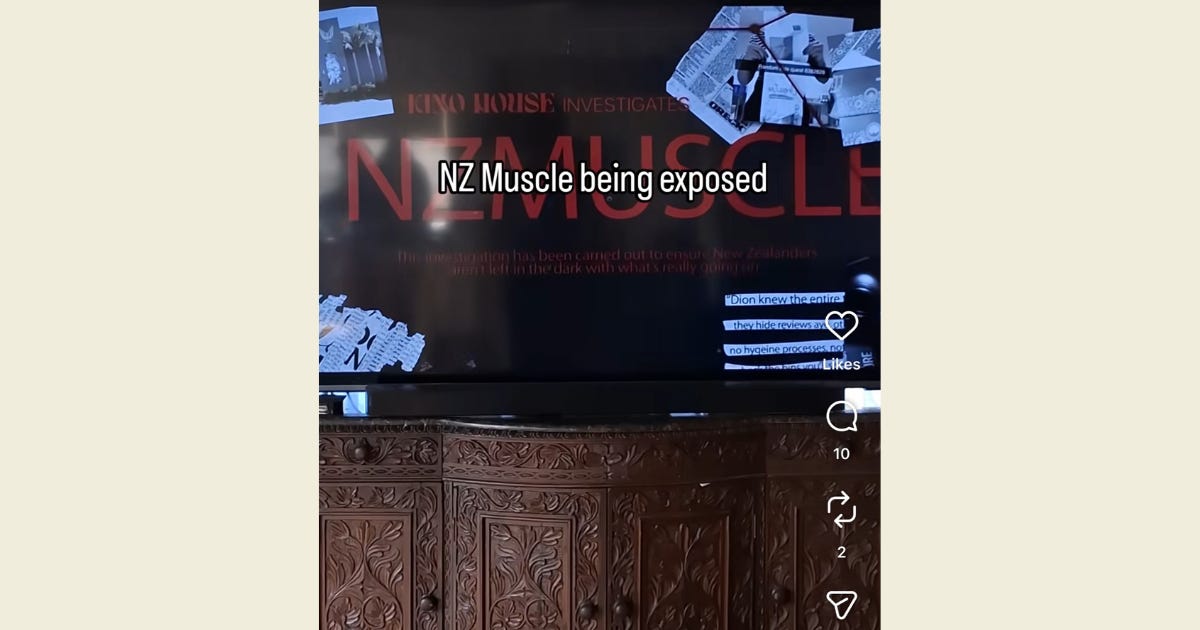
To that audience, this is their front page news story and the top of the 6pm bulletin. They're watching the YouTube documentary on TV screens in their living rooms. It’s a big investigation into something they actually care about, made by someone they already trust, delivered to the place they were already watching.
There is a concerted effort to keep asking whether content on social media made by creators counts as real journalism. The audience for this story was never going to wait for a masthead to bless the story. As far as they’re concerned, it is already blessed.
They have worked out what they will treat as news, who they will trust to bring it and what shape it should arrive in, without the blessing of the institutions that used to run it.
You can find that thrilling or unnerving. Mostly, it’s worth understanding, because this genie ain’t getting back in the bottle now.